
Beer is perhaps the most famous beverage in the world. It is enjoyed all over the globe, and most people of legal drinking age are familiar with it.
However, as popular as beer is, there are many things most people don’t know about it.
5. Beer and Facial Hair
Facial hair can make drinking beer rather difficult. However, it can also produce drinkable beer. A brewmaster in Oregon has actually discovered a way to make beer from yeast collected from his own beard.
Although this may sound rather disgusting, it is actually a valid way to collect yeast. Most of the fermenting yeast in the world is harvested from rotten bits of nature, so snagging some from someone’s beard is just a logical (if slightly disturbing) extension of the normal process.
4. The Foam
Many drinkers disapprove of the foam on top of a beer glass: It makes drinking difficult and looks unappetizing to some. However, the foam is a very important part of the beer. The foamy “head,” as it is called, is formed by a complex carbon-dioxide reaction and can say a lot about the quality of the beer. Many stout beers, Guinness in particular, are characterized by their gloriously foamy head. The lack of head, on the other hand, can mean that your beer is probably flat and bland-tasting.
The Holy Grail of foam enthusiasts is so-called Brussels Lace. It is the perfect foam that refuses to go away and forms a lace-like residue pattern once the glass is empty. This can only be achieved with a high-quality beer. Interestingly, Brussels Lace will never form on a dirty glass, so it also tells the drinker that their glass has been properly cleaned.
3. Marijuana and Beer
Not many people are aware that marijuana and beer are actually quite close relatives. The flavoring agent in beer, hops, is a member of the Cannabaceae family, which (as you might deduce from the name) also includes Cannabis sativa, the marijuana plant.
Although the plants are of the same family and share many genetic similarities, you can’t just replace one with the other. Still, they are similar enough that enterprising souls have attempted to graft hops into marijuana and brew marijuana beer. Details of these projects are hard to find—which presumably means the results have been less than pleasant.
2. Water and Beer
Although water is generally quite tasteless, it is actually a very important factor in the taste of a beer. The vast majority of beer is water, after all—no amount of skill or fine ingredients will save a beer if the water is low-quality.
Throughout history, many breweries chose their location exclusively because there was quality water nearby. Purity is obviously a factor: Many home brewers get unfortunate surprises because they have been using chlorinated tap water. Also, water reservoirs in different areas vary in taste and beer-making quality.
Many think that some of the best beer-making waters in the world come from Ireland’s mountains. This water is used to make Guinness. Take that as you will.
1. The Best Beer in the World
Beers are extremely difficult to rank. One’s superiority to another is largely a matter of taste. However, when it comes to naming the absolute best beer in the whole world, beer lovers are in complete agreement. This honorable drink is called Westvleteren 12. It is a 10.2 percent ABV (alcohol by volume) Trappist beer that has been in production since 1940.
Westvleteren 12 is a dark beer with a refined, chocolate-like taste that is said to be unrivaled by any other beer. It is instantly recognizable by its distinct yellow cap and complete lack of any labels. Usually, it is only available by driving to the monastery that makes it (located deep in the countryside of Belgium) and buying it straight from the monks, which often involves waiting patiently in a line of cars that can extend for miles. However, the monks are fully aware of the superiority of their product and are willing to use its reputation to their benefit on occasion. When their monastery needed a new roof in 2012, they briefly exported Westvleteren 12 to various countries with prices ranging between $75 and $85 for a six-pack and two tasting glasses.
It sold out in minutes.
Photo Credit: Fun Facts About Beer

As the summer heat kicks into full gear, you’re going to need a proper way to cool off. Forget that lime-flavoured “lite beer” swill and let these refreshing beverages be your go-to drinks when the mercury spikes.
1. Phillips Ginger Beer

Ginger beers aren’t for everyone. But for the ones who do indulge, this Victoria, BC brew is perfect for the dog days of summer. With a tag line that says, “with more ginger than Gilligan can handle” it shouldn’t be surprising that it has a strong ginger taste. But it’s got a nice refreshing kick that’d be perfect after a round of golf on a hot summer day.
2.Creemore Kellerbier

Creemore has been pumping out a near-perfect beer for ages and they’ve added a fourth variation to their stable of brews. The Kellerbier differs from the classic version because it’s unfiltered. It has a brown, cloudy colour, and a citrusy scent and taste that are all tied off with just a touch of a hoppy bitterness at the end. Surely a beer fit for summer drinking.
3. Schneider Hopfen Weisse

This bottle-fermented brew is interesting because it is billed as a collaborative effort between German-based Weisses Bräuhaus and New York’s Brooklyn Brewery. Long story short, the brew masters from each place are buddies – and they each brew a similar beer (slightly different because of variations in local hops.) Get it before the hipsters ruin it for everyone.
4.Celt Golden Crafted Ale

The best way to describe Celt’s Golden Crafted Ale is to just call it a classic beer done well. It’s got a beautiful golden brown colour and strong caramel and toffee notes to go with a slightly fruity, hoppy taste. It’s simple, it’s traditional, but it’s done nearly (it’s a bit on the light side) to perfection.
5. Propeller Extra Special Bitter

When one thinks of great beer destinations in Canada, the Maritimes should be the first place that comes to mind. This copper-coloured English-style bitter is a Halifax classic and has a nice balance of maltiness and (obviously) bitterness from the hops. Plus, if you actually live on the east coast you can get it in 1.9L growlers! Bottoms up.
Source: Sharp Magazine

The first thing you have to do when you start planning your brewery is come up with a name. You can go with something classy, like say, “Classy Ales.” Or you could go a different route altogether and name your brewery “Ass Clown.” Or “Big Beaver.” We found 10 incredible brewery names. An argument could be made that some of the names on this list are in poor taste, but you could also argue that these names are awesome. Check out the gallery and decide for yourself.
 Ass Clown Brewing, Cornelius, N.C.
 Belching Beaver, Vista, California
 Below Grade Brewing, Bend, Oregon
 Big Beaver Brewing, Loveland, Colorado
 Broken Tooth Brewing, Anchorage, Alaska
 Dirty Bucket Brewery, Woodinville, Washington
 Pinglehead Brewing Company, Orange Park, Florida
Source: Great Brewery Names

As a beer drinker we need to know the language of marketing. When you’re staring at a sixpack or bomber of beer at your local bottle shop, you might encounter some unfamiliar phrases. Here are five essential terms you should know.
Bottle Conditioned
Bottle conditioned is brewer-speak to describe a beer that is naturally carbonated. Prior to packaging, beer is allowed to ferment until the yeast is totally satiated, having eaten all the sugars it can. To bottle condition the beverage, brewers bottle the beer with a bit more sugar for that yeast to munch on. They use a pre-calculated dose that is just the right amount to produce carbon dioxide to be absorbed as carbonation withoutoverpressurizing or worse, blowing up, the bottle. (Nobody wants your beer to explode.) The alternative to bottle conditioning is called force carbonation, in which carbon dioxide is injected into the finished beer without an additional fermentation.
Some beer purists believe that bottle conditioning is indisputably the best way to carbonate beer—arguments in support of the process tout its ability to produce a more pleasant (fine and soft) carbonation, consume oxygen in the bottle’s headspace, and develop character over time.
Dry Hopped
This is an odd one—aren’t all hops dried before they are used in beer? With rare, seasonal exceptions, that is exactly correct. But ignore that for a minute. Dry hopping refers not to the condition of the hops themselves, but how they are used. It means that the brewers are adding hops after fermentation. At this point, the hops are not boiled and thus, the acids held within the flower do not release their potent bitterness. They do, however, release their flavorful and aromatic oils, which will make your beer taste extra juicy, grassy, lush, or floral, depending on the hop variety. IPAs, pale ales, and other hop-driven styles have always used this technique, but brewer experimentation has pushed its presence into the full range of beer styles.
Gypsy Brewer
This arguably-offensive term refers to an increasingly common symbiotic relationship in the beer world. Most established brewers aren’t using their expensive brewing equipment 24/7. Other brewers are just getting into the biz and can’t afford or don’t want to buy all that pricey stainless steel. See where I’m going with this? The brick and mortar breweries can get a little extra cash flowing in by renting out their brew kettles and fermentation space, and those other brewers can get their beers to market without insane overhead. Without the permanence of a physical address, many of these brewers make beer wherever they can, often embracing a nomadic lifestyle…hence the gypsy nomenclature. Some of these folks, like Massachusetts’ Pretty Things, have adopted the alternative name “tenant brewer” to avoid rubbing folks the wrong way.
IBU
I’m often asked what IBU stands for, and feel bad giving the answer. “International Bitterness Units” doesn’t really tell you all that much about what that number on your bottle really means, does it? IBUs, when you get down to it, are simply a measure in parts per million of the isomerized alpha acid content in beer. Oh jeez, this isn’t getting any easier. To make it short and sweet: IBUs are a measure of how hoppy a beer is.
But that doesn’t tell the whole story. Perceived bitterness depends on way more than just how many hops are thrown into the kettle. The sweetness and alcohol level of a beer, for example, plays a huge role in the end bitterness of that beer. Two beers, both with 35 IBUs, can taste bracingly bitter or not at all. So really “International Bitterness Units” is a bit of a misnomer. In fact, as a measure, it is nowhere near as useful as folks to seem to make it out to be, so don’t get too caught up on the IBU number.
Imperial
Imperial IPA, imperial stout, imperial red, imperial pilsner—this “imperial” word is all over beer bottles these days. But what does the word—one long associated with royalty—have to do with your plebian drinking pursuits? The terminology harkens back—way back (think 1700s)—to the days in which the Russian imperial court (there’s that word again!) consumed a custom-made extra-strong stout that was shipped to them from England. Over the centuries, this exalted naming convention was applied to all variations on styles of beer that were bigger—stronger, hoppier, more intense, more royal—than the beers that inspired them.
Source: Decoding Beer Labels

One of the best things about beer is the awesome variety of styles to choose from. This gorgeous interactive guide from the Brewers Association showcases 77 US beer styles to help you decide what to drink next.
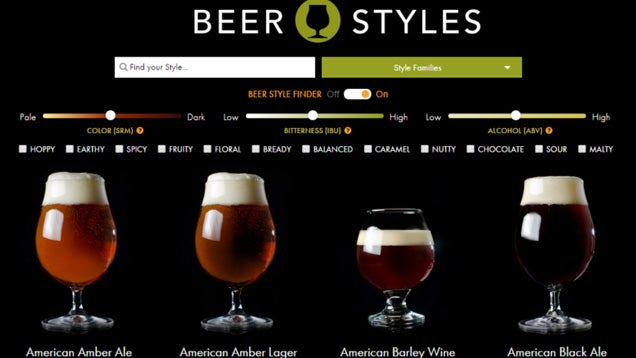
We’ve shared a beer style flowchart with you before, but this photo-rich guide is incredibly comprehensive. Turn on the beer style finder and you can narrow down styles by color, bitterness, amount of alcohol, as well as flavor notes.
Each style has its own dedicated page with recommended food pairings and examples. There’s an A-to-Z text-based guide as well.
The whole site is a great reference for beer lovers in general.
Photo Credit: Shutterstock
Source: Find your Perfect Beer to Drink

When I go home to Tennessee, nobody ever asks me if I want a beer. “How ’bout a col’beer?” say the Southerners as they toss a can through the air. (All one word.) The ice cold brew cuts through the summertime humidity nicely. This frigid February in New York City deserves a different kind of cocktail.
How about hot beer? Mulled wine is nice. Hot toddies are delicious. Why not warm up porter in a mug or sip a steamy spiced ale? Earlier this month, I was turned on to the idea by an Atlantic article about the history of the once-popular hot beer, an idea that sounds utterly insane in the era of Coors cold-activated can technology. Americans love col’beer. Purists prefer a more nuanced approach, where each style of beer is chilled or warmed to the appropriate temperature for maximum enjoyment. (That’s about 45-degrees for pilsners and light beers and 55-degrees for ales and stouts.) Right now, in the Hoth that is Gotham, that right temperature is piping hot.
The idea really isn’t as insane as it sounds. The Atlantic’s historic take suggests that hot beer was actually more popular than cold beer in the centuries before refrigeration. One pamphlet from 1641 insisted that drinking beer “hot as blood” could restore health, since the stomach worked like a cauldron according to medical knowledge at the time. An 1888 book argued, “When beer was the staple drink, morning, noon, and night, it was natural that our ancestors would prefer their breakfast beer warm and ‘night-caps’ flavoured.” Even Charles Dickens wrote about “the happy circumstances attendant upon mulled malt.”
So I did some Googling. A search for “mulled beer” returned half a million results, but a recipe highlighted by Bon Appetit caught my attention. It came from an 1891 bartending guide and basically sounded like a hot toddy made with beer:
Dissolve a spoonful of bar sugar in a little hot water in a mug, fill the mug with ale, grate nutmeg over the top and serve.
As I tend to do—often with questionable results—I improvised on the recipe. Instead of sugar, I used honey, and instead of nutmeg, I used cinnamon. I also added lemon because hot toddy. Since “ale” is such a broad class of beers, I also decided to get a mixed six-pack and experiment on my coworkers. The results were questionable, but amazingly, two of the mulled malt cocktails turned out to be pretty damn delicious. Here’s the breakdown, in some specific order.
Einstöck Icelandic White Ale
 Hot damn, this was good. I’d read that steamy brews taste better when they’re made with a wheat beer or a white ale. This almost white-chocolatey ale from Iceland is delicious cold and downright heart-warming when hot. The lemon really brought out the citrus flavors, and it was the only hot beer that the Gizmodo staff universally enjoyed.
Budweiser
 LOL. This was supposed to be the joke entry, but it was fucking fantastic. The watery soda beer ended up tasting a bit like hot apple cider with a curious malty finish. Seriously, amazing if you’re on a hot beer budget.
Two Roads Ol’Factory Pils
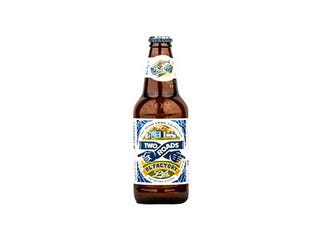 This is where things get iffy. Long story short, the hoppy taste that gives beer a pleasant punch when it’s cold basically tastes like shit when it’s hot. The sweet aromas from the honey and lemon make for good sniffing, but once you toss it back, there’s a bitter aftermath. The Two Roads wasn’t too bad. But it wasn’t too good either.
Firestone Double Jack Double IPA
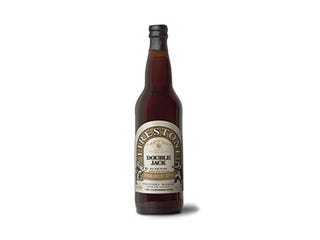 This elegant double IPA was perhaps the most interesting warm beer cocktail—not necessarily in a delicious way, though. The complexity of the brew really made this a head scratcher, but nobody at Gizmodo could stomach more than a sip. This is the thinking man’s or woman’s hot beer.
Coopers Brewery Sparkling Ale
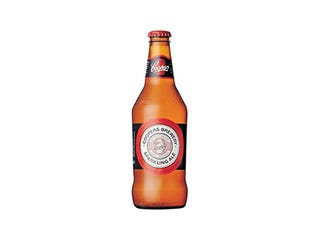 Australia’s fancy Budweiser wannabe didn’t taste so hot, literally. It tasted so barfy. So gross. So sad.
Photo Credit: Shutterstock
Source: Hot Beer


